Ingredients
3 pounds russet potatoes
6 large eggs, lightly beaten
2 large onions, grated
3/4 cup matzoh meal (or all-purpose flour)
2 tablespoons sugar
2 teaspoons salt
2 teaspoons ground pepper
1/4 cup chicken fat (optional)
1/2 cup peanut oil (or more) for frying
Instructions
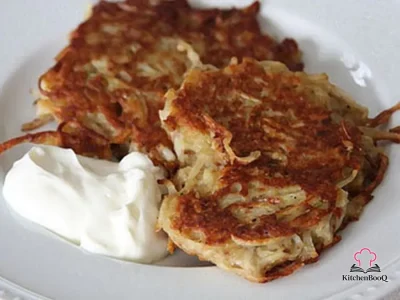
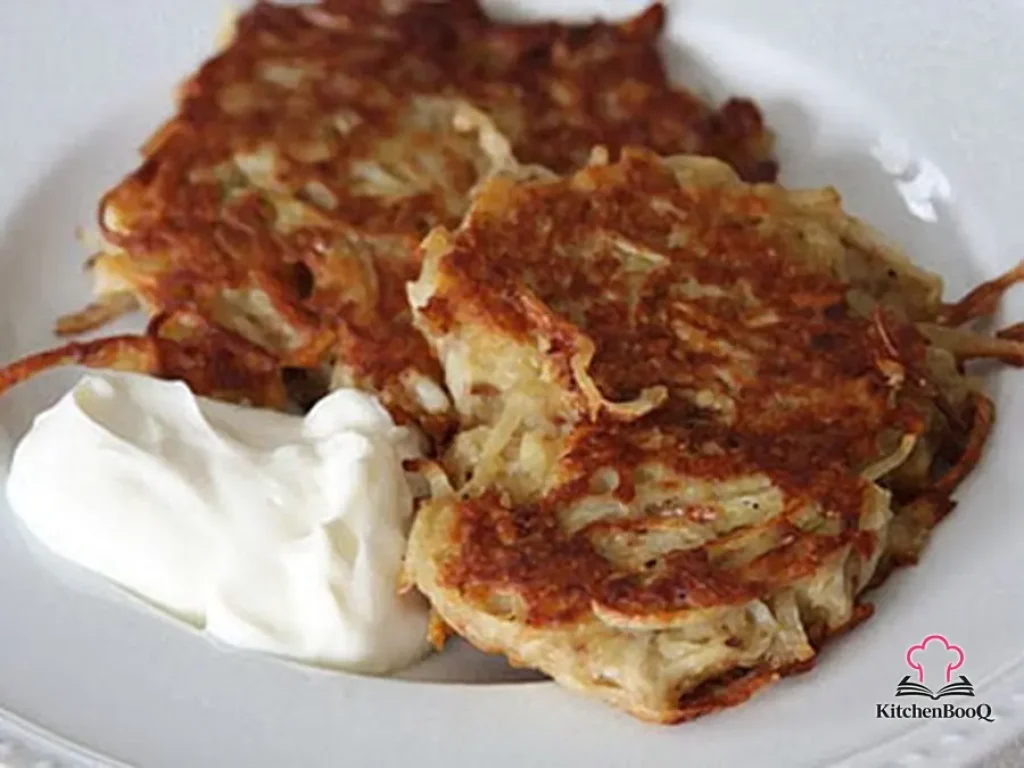
Choose russet potatoes. Apparently their high starch content is ideal for holding together that combination of crispy-crunch outside and creamy inside
Drain as much of the liquid as possible from the potatoes using a colander or cheesecloth. The drier the mixture, the better result frying.
Use matzoh meal or use a combination of matzoh meal and flour as a binder.
Use vegetable oil. You want to maintain oil at about 350 degrees.
Drain latkes on paper towels and serve immediately. You can also keep them warm in a low oven for an hour or more. In the fridge they can keep for a day or two or in the freezer, separated and well wrapped, for up to two weeks. Reheat in a single layer on a cookie sheet in a 400 degree oven.
SERVE with applesauce and sour cream. For cocktails, make bite-sized latkes (about a tablespoon of batter a piece) and top with sour cream and a smoked salmon or caviar.
Key Points About Ingredients:
- Russet potatoes are essential here — their high starch content is what creates that signature crispy exterior and creamy interior that defines a great latke.
- Matzoh meal acts as the traditional binder, absorbing excess moisture and lending a subtle texture that flour alone cannot replicate.
- Chicken fat (schmaltz) is an optional but deeply traditional addition that adds rich, savory depth of flavor to the batter.
- Draining as much liquid as possible from the grated potatoes is the single most important step for achieving properly crispy latkes.
- Peanut oil has a high smoke point making it ideal for maintaining the 350°F frying temperature needed for even, golden browning.
Key Nutritional Insights:
- Russet potatoes are a good source of potassium and vitamin C, offering meaningful nutritional value even after frying.
- Eggs contribute high-quality complete protein as well as choline, vitamin B12, and fat-soluble vitamins to each serving.
- Frying in peanut oil adds primarily monounsaturated and polyunsaturated fats, which are considered heart-healthier fat profiles.
- Each serving provides a moderate amount of carbohydrates from the potatoes and matzoh meal, making latkes a satisfying energy source.
- The sodium content is moderate per serving; those watching sodium intake can reduce the added salt without compromising structure.
Nutrition Facts
- Serving Size1
- Amount per serving
- Calories310
- Standard DV% Daily Value*
- Total Fat16 g72 g22.22%
- Saturated Fat3 g20 g15%
- Trans Fat0 g
- Polyunsaturated Fat5 g
- Monounsaturated Fat7 g
- Cholesterol124 mg300 mg41.33%
- Sodium480 mg2300 mg20.87%
- Total Carbohydrate34 g275 g12.36%
- Dietary Fiber3 g28 g10.71%
- Total Sugars4 g
- Added Sugars2 g50 g4%
- Sugar Alcohal0 g
- Protein8 g50 g16%
- Vitamin D (Cholecalciferol)40 mcg20 mcg200%
- Calcium42 mg1300 mg3.23%
- Iron2 mg18 mg11.11%
- Potassium720 mg4700 mg15.32%
- Vitamin A180 mcg900 mcg20%
- Vitamin C (Ascorbic Acid)12 mg90 mg13.33%
- Vitamin E (Tocopherol)3 mg15 mg20%
- Vitamin K8 mcg120 mcg6.67%
- Vitamin B1 (Thiamin)0.2 mg1.2 mg16.67%
- Vitamin B2 (Riboflavin)0.18 mg1.3 mg13.85%
- Vitamin B3 (Niacin)2.8 mg16 mg17.5%
- Vitamin B6 (Pyridoxine)0.4 mg1.7 mg23.53%
- Folate38 mcg400 mcg9.5%
- Vitamin B12 (Cobalamine)0.5 mcg2.4 mcg20.83%
- Biotin12 mcg30 mcg40%
- Vitamin B5 (Pantothenic acid)0.9 mg5 mg18%
- Choline145 mg550 mg26.36%
- Phosphorus185 mg1250 mg14.8%
- Iodine12 mcg150 mcg8%
- Magnesium32 mg420 mg7.62%
- Zinc1.1 mg11 mg10%
- Selenium18 mcg55 mcg32.73%
- Copper0.18 mg0.9 mg20%
- Manganese0.4 mg2.3 mg17.39%
- Chromium4 mcg35 mcg11.43%
- Molybdenum8 mcg45 mcg17.78%
- Chloride210 mg2300 mg9.13%